
Tuesday, September 25, 2012

Monday, September 17, 2012
William Somerville

‘When autumn smiles, all beauteous in decay,
And paints each chequered grove with various hues,
My setter ranges in the new shorn fields,
His nose in air erect; from ridge to ridge,
Panting, he bounds, his quartered ground divides
In equal intervals, nor careless leaves
One inch untried. At length the tainted gale
His nostrils wide inhale, quick joy elates
His beating heart, which, awed by discipline
Severe, he dares not own, but cautious creeps
Low-cowering, step by step; at last attains
His proper distance, there he stops at once,
And points with his instructive nose upon
The trembling prey. On wings of wind and upborne
The floating net unfolded flies; then drops,
And the poor fluttering captives rise in vain.’
Thursday, September 6, 2012

Wednesday, September 5, 2012
Diversity
Absolute diversity has only one outcome; chaos. Without some binding force to hold the bits of time, matter and space together we are left with an anti-cosmos. Although many have attempted, it is impossible to live, consistently, in an anti-universe. The best expressions of this are to be found in pieces of art. You can hang a disorderly
painting on your wall but you would not be able to function if you had to live within the disorder of the painting. The order of reality always creeps back, as the chaotic painting is not hung backwards on the wall, the artist created it to be seen, to make a statement, to make a truth claim that there is no truth.
If all ideas are relative how can diversity be better than unity. MR
painting on your wall but you would not be able to function if you had to live within the disorder of the painting. The order of reality always creeps back, as the chaotic painting is not hung backwards on the wall, the artist created it to be seen, to make a statement, to make a truth claim that there is no truth.
If all ideas are relative how can diversity be better than unity. MR
Saturday, September 1, 2012
Wendell Berry

“The basis of my resistance is not that I’m a crank, but that I’m satisfied. I didn’t dislike the way I was doing it.” Wendell Berry as quoted in National Review, July 30, 2012.
Sunday, August 26, 2012
Francis Schaeffer
At the close of his ministry, Jesus looks forward to his death on the cross, the open tomb and the ascension. Knowing that he is about to leave, Jesus prepares his disciples for what is to come. It is here that he makes clear what will be the
distinguishing mark of the Christian:
"My children, I will be with you only a little longer. You will look for me, and just as I told the Jews, so I tell you now: Where I am going, you cannot come. A new command I give you: Love one another. As I have loved you, so you must love one another. By this all men will know that you are my disciples, if you love one another." (John 13:33-35)
The first commandment is to love the Lord our God with all our heart, soul and mind. The second commandment bears the universal command to love men. Notice that the second commandment is not just to love Christians. It is far wider than this. We are to love our neighbor as ourselves.
I Thessalonians 3:12 carries the same double emphasis: "And the Lord make you to increase and abound in love one toward another, and toward all men, even as we do toward you." Here the order is reversed. First of all, we are to have love one toward another and then toward all men, but that does not change the double emphasis. Rather, it points up the delicate balance — a balance that is not in practice automatically maintained.
In I John 3:11 (written later than the gospel that bears his name) John says, "For this is the message that you heard from the beginning, that we should love one another." Years after Christ's death, John, in writing the epistle, calls us back to Christ's original command in John 13. Speaking to the church, John in effect says, "Don't forget this . . . Don't forget this. This command was given to us by Christ while he was still on the earth. This is to be your mark."
distinguishing mark of the Christian:
"My children, I will be with you only a little longer. You will look for me, and just as I told the Jews, so I tell you now: Where I am going, you cannot come. A new command I give you: Love one another. As I have loved you, so you must love one another. By this all men will know that you are my disciples, if you love one another." (John 13:33-35)
The first commandment is to love the Lord our God with all our heart, soul and mind. The second commandment bears the universal command to love men. Notice that the second commandment is not just to love Christians. It is far wider than this. We are to love our neighbor as ourselves.
I Thessalonians 3:12 carries the same double emphasis: "And the Lord make you to increase and abound in love one toward another, and toward all men, even as we do toward you." Here the order is reversed. First of all, we are to have love one toward another and then toward all men, but that does not change the double emphasis. Rather, it points up the delicate balance — a balance that is not in practice automatically maintained.
In I John 3:11 (written later than the gospel that bears his name) John says, "For this is the message that you heard from the beginning, that we should love one another." Years after Christ's death, John, in writing the epistle, calls us back to Christ's original command in John 13. Speaking to the church, John in effect says, "Don't forget this . . . Don't forget this. This command was given to us by Christ while he was still on the earth. This is to be your mark."
Lament by Evangeline Paterson

Weep, weep for those
Who do the work of the Lord
With a high look
And a proud heart.
Their voice is lifted up
In the streets, and their cry is heard.
The bruised reed they break
By their great strength, and the smoking flax
They trample.
Weep not for the quenched
(For their God will hear their cry
And the Lord will come to save them)
But weep, weep for the quenchers
For when the Day of the Lord
Is come, and the vales sing
And the hills clap their hands
And the light shines
Then their eyes shall be opened
On a waste place,
Smouldering,
The smoke of the flax bitter
In their nostrils,
Their feet pierced
By broken reed-stems . . .
Wood, hay, and stubble,
And no grass springing.
And all the birds flown.
Weep, weep for those
Who have made a desert
In the name of the Lord.
Wednesday, August 22, 2012
The American Christian???
"(Today's Christian is) someone who has made the decision to be an emotionally well-adjusted, self-actualized risk-taking leader who knows his purpose, lives a no regret life of significance, has overcome his fears, enjoys a healthy marriage, is an attentive parent celebrating recovery from all their hurts, their habits, their hang-ups, and that practices biblical stress relief techniques, is financially free from consumer debt, fosters emotionally healthy relationships with his peers, attends a weekly life group, volunteers regularly at church, tithes off his gross, and has taken at least one humanitarian aid trip to a third world nation......Never once do you read in that modern contextualized interpretation that a Christian is one who sees their sin, confesses their sin, repents of their sin, and receives the gift of salvation in Christ alone. That's how far we've come. So Christianity now is dictated and defined by culture." Peter Murphy
Monday, August 20, 2012
G. K. Chesterton
Poverty is not the Problem
Sunday, August 19, 2012

Friday, August 17, 2012
The Loss of Shame
Our Narcissistic culture has diminished the use of shame as a motivator for people. Today, no one is expected to be ashamed of any behavior; what used to be considered shameful is now more often hailed as a source of self-esteem. Examples are too numerous to mention, but a recent one stands out: Once upon a time behavior such as Charlie Sheen has exhibited would be considered so shameful as to warrant secrecy. Now it is big business. Perry R. Branson, M.D.
The above quote came from the atheistic magazine Psychology Today; it is interesting that Branson finds the concept of shame to be a major pillar of human civilization and he fears that without it and its necessary relation to some form of religion, that our culture is in danger of complete collapse.
The state of the American culture (what's left of it) is in desperate need of a type of shame that is based upon Truth (Christ), not on some form of psychological abstract necessity as presented by Branson. I will give the man credit for understanding the need for morality but he is lost in the maelstrom of diversity and can provide no answers to a dying human race. MR
The above quote came from the atheistic magazine Psychology Today; it is interesting that Branson finds the concept of shame to be a major pillar of human civilization and he fears that without it and its necessary relation to some form of religion, that our culture is in danger of complete collapse.
The state of the American culture (what's left of it) is in desperate need of a type of shame that is based upon Truth (Christ), not on some form of psychological abstract necessity as presented by Branson. I will give the man credit for understanding the need for morality but he is lost in the maelstrom of diversity and can provide no answers to a dying human race. MR
Thursday, August 16, 2012
Daniel Defoe
“It put me upon reflecting how little repining there would be among mankind at any condition of life, if people would rather compare their condition with those that were worse, in order to be thankful, than be always comparing them with those which are better, to assist their murmurings and complaining.”
“I have since often observed, how incongruous and irrational the common temper of mankind is, especially of youth ... that they are not ashamed to sin, and yet are ashamed to repent; not ashamed of the action for which they ought justly to be esteemed fools, but are ashamed of the returning, which only can make them be esteemed wise men.”
Bad as he is, the Devil may be abused,
Be falsely charged, and causelessly accused;
When men, unwilling to be blamed alone,
Shift off the crimes on him, which are their own.
“I have since often observed, how incongruous and irrational the common temper of mankind is, especially of youth ... that they are not ashamed to sin, and yet are ashamed to repent; not ashamed of the action for which they ought justly to be esteemed fools, but are ashamed of the returning, which only can make them be esteemed wise men.”
Bad as he is, the Devil may be abused,
Be falsely charged, and causelessly accused;
When men, unwilling to be blamed alone,
Shift off the crimes on him, which are their own.

Wednesday, August 8, 2012
Marshall McLuhan
Ads are the cave art of the twentieth century.
Advertising is the greatest art form of the 20th century.
Art at its most significant is a Distant Early Warning System that can always be relied on to tell the old culture what is beginning to happen to it.
Art is anything you can get away with.
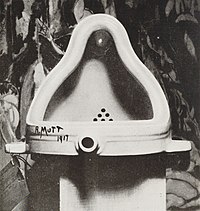
Advertising is the greatest art form of the 20th century.
Art at its most significant is a Distant Early Warning System that can always be relied on to tell the old culture what is beginning to happen to it.
Art is anything you can get away with.
Wednesday, February 29, 2012
Noah Sanders

"...the most prevalent method of agriculture today, industrial agriculture, seems to be based on a worldview that ignores God and elevates man and his wisdom as the source of truth. This humanistic worldview results in a form of agriculture whose primary objective is maximum yield and profit and whose ultimate source of wisdom is science." From " Born Again Dirt".
Tuesday, January 31, 2012
Montaigne
So many goodly citties ransacked and razed; so many nations destroyed and made desolate; so infinite millions of harmless people of all sexes, states and ages, massacred, ravaged and put to the sword; and the richest, the fairest and the best part of the world topsiturvied (topsy-turvy), ruined and defaced for the traffick of Pearles and Pepper: Oh, mechanicall victories, oh base conquest. Montainge
Monday, January 30, 2012
Thomas Jefferson

...it is not too soon to provide by every possible means that as few as possible shall be without a little portion of land. The small landholders are the most precious part of the state...
Isaiah 5:8, 12a
Woe to those who add house to house
and join field to field
until everywhere belongs to them
and they are the sole inhabitants.
and join field to field
until everywhere belongs to them
and they are the sole inhabitants.
But they do not pay attention to the deeds of the Lord,
Nor do they consider the work of His hands.
Wednesday, January 4, 2012
E.P. Roe
Nothing can conduce more to happiness and prosperity than multitudes of rural homes. In such abodes you will not find Socialists, Nihilists, and other hare-brained reformers who seek to improve the world by ignoring nature and common sense. Possession of the soil makes a man conservative, while he, at the same time, is conserved.
Sustainable Living, Wendall Berry
Industrialism begins with technological invention. But agrarianism begins with
givens: land, plants, animals, weather, hunger and the birthright knowledge of
agriculture. Industrialists are always ready to ignore, sell, or destroy the past in
order to gain the entirely unprecedented wealth, comfort, and happiness
supposedly to be found in the future. Agrarian farmers know that their very
identity depends on their willingness to receive gratefully, use responsibly and
hand down intact an inheritance, both natural and cultural, from the past.
Agrarians understand themselves as the users and caretakers of some things they
did not make, and of some things that they cannot make. Wendall Berry
givens: land, plants, animals, weather, hunger and the birthright knowledge of
agriculture. Industrialists are always ready to ignore, sell, or destroy the past in
order to gain the entirely unprecedented wealth, comfort, and happiness
supposedly to be found in the future. Agrarian farmers know that their very
identity depends on their willingness to receive gratefully, use responsibly and
hand down intact an inheritance, both natural and cultural, from the past.
Agrarians understand themselves as the users and caretakers of some things they
did not make, and of some things that they cannot make. Wendall Berry
Virgil
I saw a man,
An old Cilician, who occupied
An acre or two of land that no one wanted,
A patch not worth the ploughing, unrewarding
For flocks, unfit for vineyards; he however
By planting here and there among the scrub
Cabbages or white lilies and verbena
And flimsy poppies, fancied himself a king
In wealth, and coming home late in the evening
Loaded his board with unbought delicacies.
An old Cilician, who occupied
An acre or two of land that no one wanted,
A patch not worth the ploughing, unrewarding
For flocks, unfit for vineyards; he however
By planting here and there among the scrub
Cabbages or white lilies and verbena
And flimsy poppies, fancied himself a king
In wealth, and coming home late in the evening
Loaded his board with unbought delicacies.
Thoreau
Take long walks in stormy weather or through deep snows in the fields and woods, if you would keep your spirits up. Deal with brute nature. Be cold and hungry and weary.”
“You must converse much with the field and woods, if you would imbibe such health into your mind and spirit as you covet for your body
"Time is but the stream I go a-fishing in. I drink at it; but while I drink I see the sandy bottom and detect how shallow it is. Its thin current slides away, but eternity remains
“You must converse much with the field and woods, if you would imbibe such health into your mind and spirit as you covet for your body
"Time is but the stream I go a-fishing in. I drink at it; but while I drink I see the sandy bottom and detect how shallow it is. Its thin current slides away, but eternity remains
Tuesday, January 3, 2012
The Civilized Savage
In 1835, the French writer Alexis de Tocqueville wrote of the great English manufacturing city
Manchester: “From this foul drain the greatest stream of human industry flows out to fertilize the
whole world. From this filthy sewer pure gold flows. Here humanity attains its most complete
development and its most brutish; here civilization makes its miracles, and civilized man is
turned back almost into a savage.”
Manchester: “From this foul drain the greatest stream of human industry flows out to fertilize the
whole world. From this filthy sewer pure gold flows. Here humanity attains its most complete
development and its most brutish; here civilization makes its miracles, and civilized man is
turned back almost into a savage.”
Subscribe to:
Posts (Atom)


_-_The_Shepherdess_(1889).jpg)